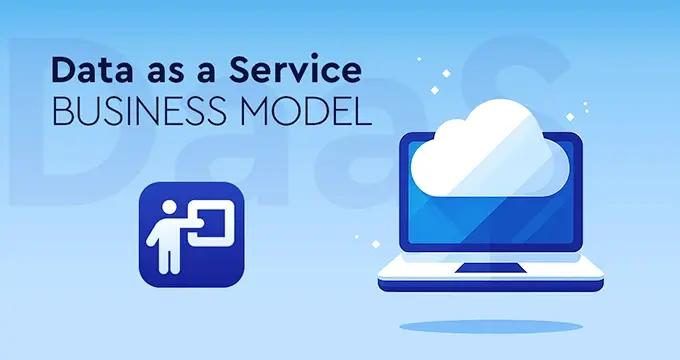
The Data as a Service (DaaS) business model is revolutionizing the way companies get and manage their data. In the DaaS model, data providers are responsible for data acquisition, data transformation, and data management. The data sources may be primary, secondary, and tertiary sources. It is then cleaned, categorized, validated, enriched, and made available to customers through cloud-based services. Companies can then get the data they need through APIs and data dashboards or download it in the format of their choice.
Data as a service business model is based on the subscription model, in which organizations can select various plans. For instance, a business may take a plan that provides general data sets, while another business may take a premium plan that includes manipulations, real-time data, and customized connectors. Businesses can get the data services they require. This makes the model economical and flexible.
Components of the Data as a Service Business Model
- Data Aggregation Data as a service DaaS companies pull data from many sources, thus guaranteeing that as many types of information as possible are available to the customers. It involves data collected from social networks, market analysis, official sources, and many other resources.
- Data Processing and Management DaaS processes the information and puts it in forms that can be used. This involves data cleaning, data normalization, and integration so that the data is credible and accurate.
- Data Delivery The processed data is then sent to clients through the cloud platforms where they can bring it into their systems conveniently. This can be done simultaneously in the real-time data in batches, or at certain intervals.
- Monetization Data as a service companies set a specific fee for clients to pay for the data they provide or per usage to make money. Some prices differ according to the data’s volume and the data complexity.
Advantages of the Data as a Service Business Model
The DaaS business model comes with several benefits:
- Cost Efficiency Through this kind of service, organizations do not incur the expenses of establishing and continuously developing the data support system.
- Scalability A firm can easily increase or decrease the level of data access depending on the current market conditions and thus always adapt well to changes.
- Availability In this case, it means that the delivery of the cloud makes data available at any time, making the work of teams easier.
- Customization and Integration It also means that the DaaS model can be tailored in ways that are conducive to the customer’s needs and preferences. This aspect is of particular importance to firms that base their operations on data analysis as a service offering, such as business models, where specially tailored data analysis is a key input for business decision-making.
- Data Quality and Security Various firms engaged in the DaaS sector tend to integrate data quality and security as key amenities. Many DaaS companies prioritize data quality and security. The integrity of the data received by the clients means that DaaS companies provide high-quality and accurate data while focusing on data security.
Conclusion
Data as a Service business model is revolutionizing the way by which organizations engage data. As the world becomes more digitalized, DaaS will become crucial in supporting organizations to remain relevant, and innovative. The subscription-based DaaS business model allows companies to access data without heavy upfront investments. Infobelpro’s data licensing services provide flexible, on-demand access to global datasets, tailored to your industry needs.